Showing posts with label Digital Photography. Show all posts

Monday, 15 July 2019

Bryan Fitzgerald

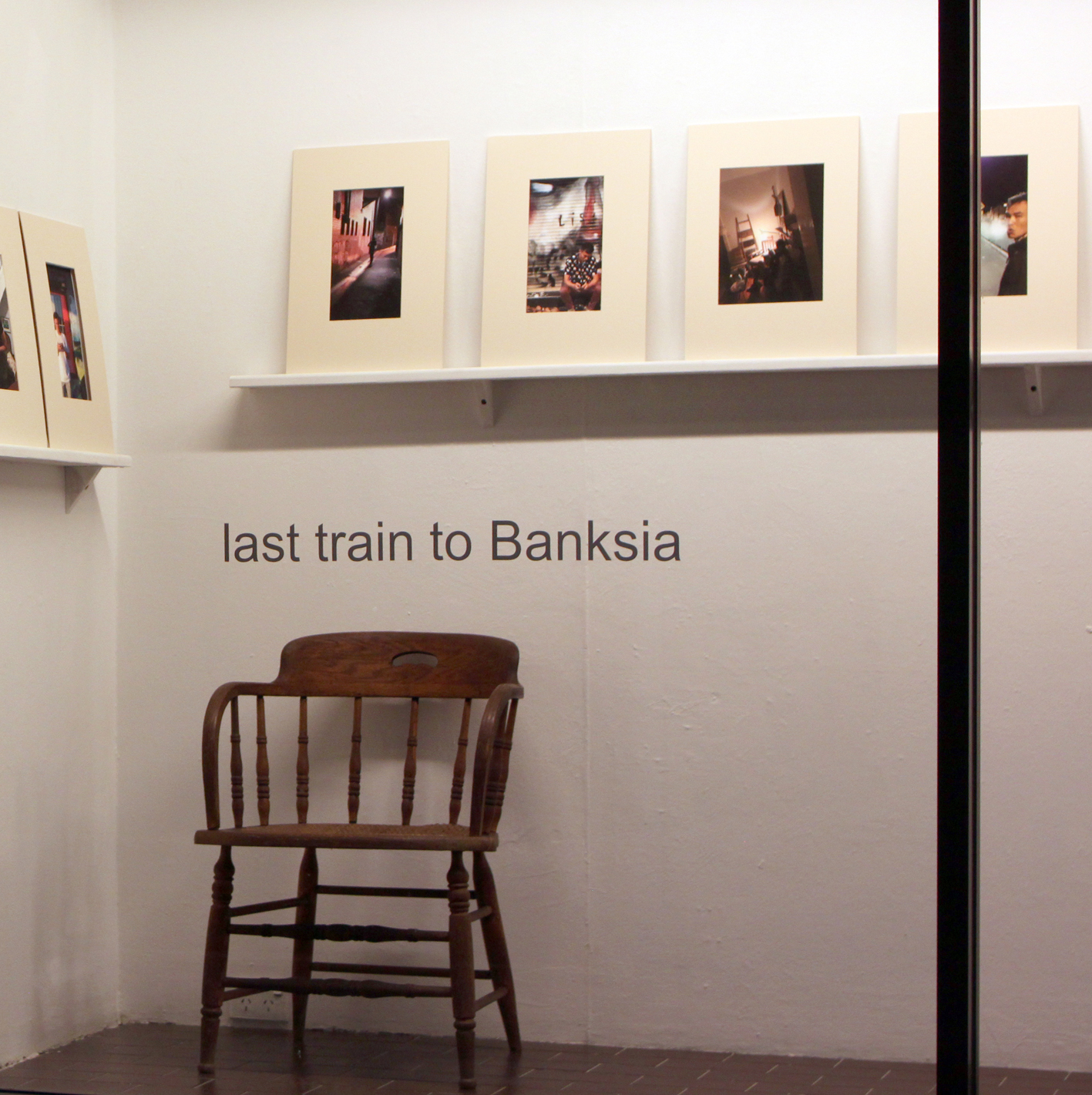
03 July - 10 August      Last Train to Banksia

Link to artist's website


Bryan is a neighbour. He is the Fitzgerald of Chee Soon and Fitzgerald, a shop along Regent St. He’s the guy who sweeps the street in a wide arc around the shop, delivering the same aura of calmness to our street that his shop exudes. And he’s a photographer who observed Raam, a friend making his way to Redfern Station for the Last train to Banksia. And among these various endeavours the idea that threads them together is patina – Bryan’s alertness to patina.

Patina is the surface texture of things that visually conveys mood. It’s the shine on an old car’s chrome-work that labels it a classic, the faint echo of wall paint that encapsulates a past rather than indicating the need for modernization. It’s the beauty born of time and the passage of hands. And it’s the romanticism of walking down a street alive to every sensation where the visual charge is of life lived. This is the mood that Bryan Fitzgerald captures for us in his photographs of our streets.
Bryan offers us the gift of pause. It is the moment of stillness, listening, watching some perfect moment of light and shade across a surface that is gone in the moment it takes to perceive it. Then again that might simply be a friend rushing to catch the last train home.

He was born in New Zealand and living there in timber houses he says that he learnt about patina from his great aunts. With a single sweep of their hands they cleaned, making no distinction between inside and out. Timber was scrubbed, the weatherboards painted, lino was no doubt mopped, week in week out imbuing each surface with life. Small changes, incremental differences building across the passage of time and recorded as surface patina are savoured here in photographs of Raam making his journey, short and local that we might understand as cinema. We watch transfixed as time passes

Bryan offers us the gift of pause. It is the moment of stillness, listening, watching some perfect moment of light and shade across a surface that is gone in the moment it takes to perceive it.  Then again that might simply be a friend rushing to catch the last train home.

-Tony Twigg


All works are for sale in editions of 5 at $350 each
Enquiries – contact@cheesoonfitzgerald.com    83991305


Tuesday, 14 June 2016

Jenny Pollak

12 June - 16 July      Mapping Home


The waters of Broken Bay, half river, half sea, wash up on a crescent of sand near where I live just south of the Hawkesbury River and losing momentum release their load. Examining the sediment – literally and metaphorically – I embark on a journey that carries me back over two hundred years.

Most of my ideas come to me intuitively and this makes completing a work of art something like an act of faith. Bringing a work to completion requires a process of observation, contemplation, resilience and trust.

Ideas are gentle creatures and do not respond well to being brought to a concrete form.  Sometimes they are lost or destroyed in the process. Sometimes they are so changed by the journey they are no longer recognisable. My task, as I see it, is to bring these creatures alive and intact into the public arena and still retaining some of the magic that inspired the journey.

My artistic practise is predominantly based in video installation, photography, sculpture and poetry – much of my work a bringing together of disparate elements as I search to express in the most visceral way I can my relationship with the natural environment.

As I work I find that what often begins as a single thought or image evolves into a richer, more layered work, or series of works, as if the image in my mind’s eye was only the outermost layer of an onion I was driven obsessively to peel back.

A two year residency at the Electron Microscope Unit, Sydney University, resulted in several bodies of work, the starting point of which were scanning electron micrographs I made of the microscopic tests (or skeletons) of single-celled marine protozoans. No larger than grains of sand, these organisms once lived in the waters of Broken Bay at the mouth of the Hawkesbury River before washing up on my local beach where they lay all but invisible to the naked eye. 

Mapping Home, 2016.  Digital photographs on butchers paper


In the work Mapping Home I wanted to present the organisms as a metaphor for the body and chose specimens that resembled heads. A map of the river and its catchment has been superimposed over the image of their bodies, its red and blue road systems serving as a metaphor for blood vessels and arteries.

In making this work I was concerned with ideas about loss and connection to place – in particular the connection to place of the first nation peoples of the Hawkesbury River who were forcibly removed from their country – and used the map and the metaphor of blood to embed in the images the inherent importance of homeland.

Jenny Pollak June 2016
www.jennypollak.com 


Jenny’s work intrigues for its use of space through collapsing the macro, the man made geographic markings, onto the micro, the single cellular organisms found amongst the sands of Pittwater.  In so doing, the work in its entirety carries a surreal, uncanny feel.  This is also arrived at by literally bringing what is invisible to the naked eye into the visible realm – bringing the unfamiliar into the everyday physical world.  In the process of deciphering and understanding the presented image, the viewer looks to the familiar, that is themselves.  Images of human skeletal parts and masks came to mind. Jenny was keen that human associations could be made with these ambiguous microscopic forms.

The images carry the weight and feel of paleontological studies with their detailed geographical inscriptions coded onto the endemic organisms which assign them their identity.  This contrasts with the lightness in the use of ordinary thin butchers paper and the way the entire prints are hung.  The images float in the vitrine like biological specimens in formaldehyde.  While the crushed effect gives the images a sculptural feel, it also adds a feeling of the ephemeral to the installation.  It is as if the existence of these documented organisms are being crushed in the anticipation of being tossed out of sight with little afterthought.  It is a metaphor of a silent observer’s documentation of the invisible and the voiceless, where the act of bringing their existence into the viewer's consciousness only lasts while the images are intact.  The imagery of the installation is visually poetic with a sense of foreboding in its narrative.  


Anie Nheu