Showing posts with label Photographic Prints. Show all posts

Friday, 17 March 2023

SLOT20


Junyee

Separate reality   12 March – 15 April


Later this year SLOT will have been exhibiting continuously for 20 years. A monumental achievement that is being celebrated by the Delmar Gallery, 144 Victoria Street, Ashfield with an exhibition SLOT20, 25 March – 30 April. A collection of 20 windows previously exhibited in SLOT that opens on Sunday 26 March 2.00 – 4.00pm. You, our public are warmly invited.


This work, Separate reality by Junyee, is one of SLOT's earliest shows. First exhibited in 2004, it is SLOT’s contribution to our anniversary exhibition and features on the cover of the Delmar Gallery catalogue to the exhibition.

Junyee is thought of as the grandfather of Filipino installation art. He is celebrated as the artist who brought indigenous materials to art making in the Philippines. Art as an idea arrived in the Philippines with Spanish colonisation is 1565. 500 years later Junyee began his work. I once asked him if he felt that there was a nationalist thread to his work, as it seemed to bridge the vast period of colonisation? He replied with a thoughtful silence, several years later he said “Tony I’m not a nationalist, I am a patriot – I love my country.”

I think Junyee’s love of his country is at the heart of Separate reality, which considers the idea of skins. In the two photographs of the model Jade, a typically graceful Filipina

alternately dressed in the global uniform of jeans and a T-shirt, and naked, Junyee presents 2 skins equally true that speak of distinctly separate Filipino identities.

Unlike Australia the Philippines has a long and layered history of colonialisation. Before the Spanish there were the Chinese, then the empire of the Sultan of Borneo. The English took it from Spain for a while, they took it back then sold it to the USA, Japan took it from them, the USA reclaimed it before handing the country to Hollywood. Some Filipinos say there is no post-colonial era; rather, the identity of the colonial power becomes increasingly abstract. They are found amongst the “skins” that Junyee is referring to where he also finds a country that he loves. An idea caught in the manner of people, the look of a landscape, its smell, the materials on offer there and the spirit that such materials present when crafted as art.

Central to this is the fact- that which separates us is that which binds us together as variations of the same thing.


Tony Twigg


Saturday, 10 July 2021

Jordan Stokes

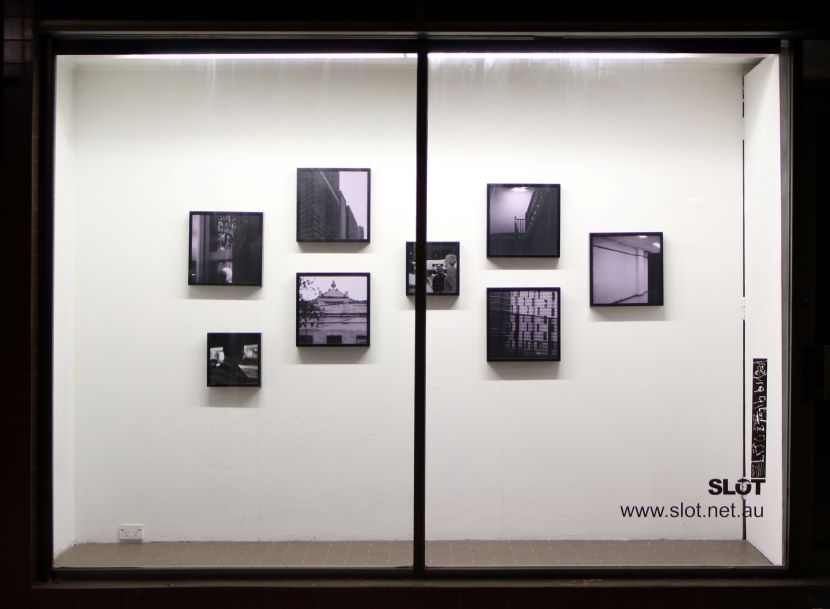
4 July - 1 August      Changing Skins 


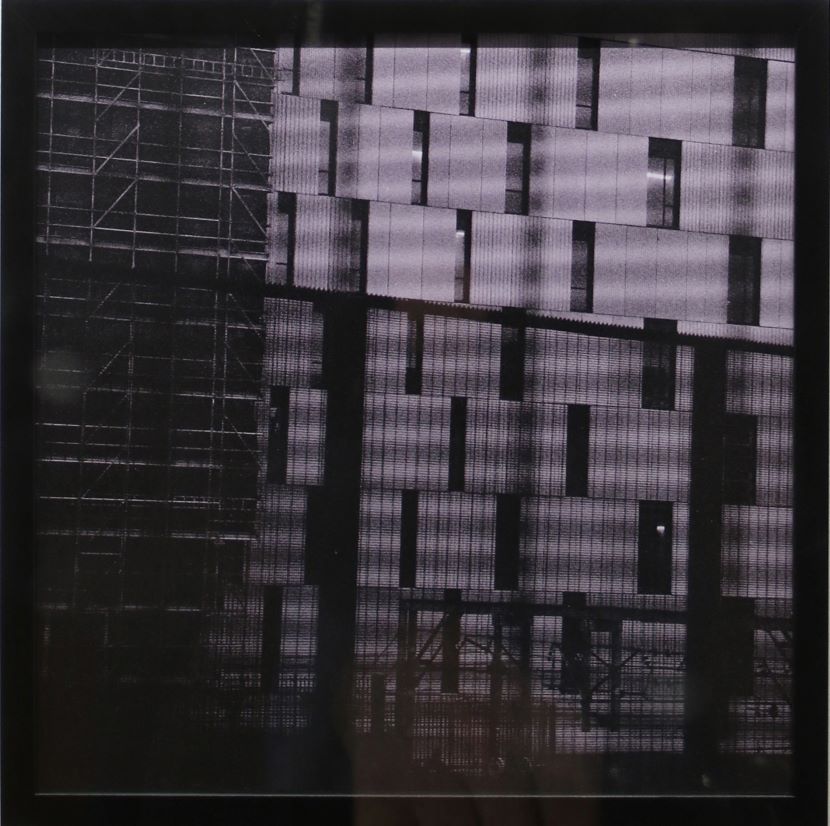
The latest Covid 19 lockdown prevented Jordan Stokes from visiting SLOT. His work arrived almost anonymously by courier. From his emails I can tell you that he “was relocated to Canberra for work recently” but little more. He wrote that by Changing Skins he means the  “endless processes of change underway in large cities…a component of their nature and success…a process that is never ending.” His idea supersedes the need for a beginning, an end and, perhaps, any celebrated high points along the way. Reason here is in the passage from one thing to the next. Sold to us these days on catch phrases like - new, technologically responsive, environmentally self-sufficient, and politically correct.

Looking at his work I notice the pediment of a building across the road. It’s a fine building, long ago the balcony was removed but all the while the paint kept peeling, as it has done while I’ve watched the Plane Tree grow in front of it. Skins, like most things around here are waiting, waiting for the developers and accountants to signal GO.

Jordan’s suite of photographs feels like a journey across town, a window, the new facade on the TNT Towers, a pedestrian crossing and a stairwell, too elegant for Kings Cross but the single fluro light is about right. There is nostalgia here that leaves the Joan Baez song, Diamonds and rust in my head, “Now your smiling out the window of that crummy hotel over Washington Square, our breath comes out in white clouds and mingles in the air, speaking strictly for me, we both could have died then and there.” 

But I don’t think Jordan has a journey in mind. There is no nostalgia here for him and no sequence to his images. It is all the same time. He comments,  “The atmospheric shift of twilight is a key moment in the city’s relentless change, when urban life adapts and people venture out to play and explore. Nightfall casts the city in shadow, when familiar views become disguised.” In the endless passage of the present moment there is only now for Jordan.

I can’t help thinking of the new Crown Casino at Barangaroo, that used to be the Hungry Mile and before that something like Barangaroo. When the time comes for the casino to make way for the next, will people cheer or seek the intervention of the National Trust?


Tony Twigg


Friday, 12 March 2021

Freya Jobbins

7 March – 9 April 2021      Firewall No. 1


Freya Jobbins is quick to point out that her work Firewall No 1 is part of a series. Each piece engaged with the “firewalls'' that people set up in public spaces to isolate themselves from community engagements. She is thinking of noise reducing headphones and the habit people have of scanning their phones that for Freya, says ‘do not approach me’ and now possibly also helps to maintain effectivesocial distancing. Her overriding interest is the mask, constructed from surrealistically disassembled body parts harvested from dolls. These works simultaneously conceal and reveal.


Freya was born in Johannesburg. Her parents migrated there from Germany and in 1974 they moved on to Australia, which handed Freya a life in the western suburbs ofSydney. After high school in Campbelltown she joined the police force becoming the first female weapons instructor in 1988. A brutal car accident brought her a second marriage, 2 more children and after they started going to school, the opportunity to make art. Now 55 and engaged in a vigorous and successful art practice in Picton at Sydney’s western edge, she commented, “I don’t make art to sell, I make it as commentary, to use my voice”.  

It is impossible to avoid the obvious connection between Freya’s mask and the Covid-19 mask that has replaced sunglasses as the mask of choice on Sydney public transport. Like the Niqab it 

hints at exoticism by focusing our attention on the unusually naked eyes of the people we encounter and offers mystery by concealing their age. Or as Saima Islam commented in a facebook post, “I love my freedom that burka and niqab has provided me. I love the way it give me courage to stand among all the other individual and be confident toward the journey of life.” Above all the Covid-19 mask provides a safe position from which to observe the world and the people encountered there. As opposed for example to the Venetian carnival mask that obscures the eyes in a manner that permits an evening of aberrant behavior. But as I consider Freya’s mask I can’t help finding an uncanny resemblance to Hannibal Lectors mask worn on this occasion by a young woman of clear and unmasked beauty. It’s a chilling dichotomy that focuses my attention on the events and concerns that are reconditioning Australia’s gender politics.


Tony Twigg


Monday, 15 July 2019

Bryan Fitzgerald

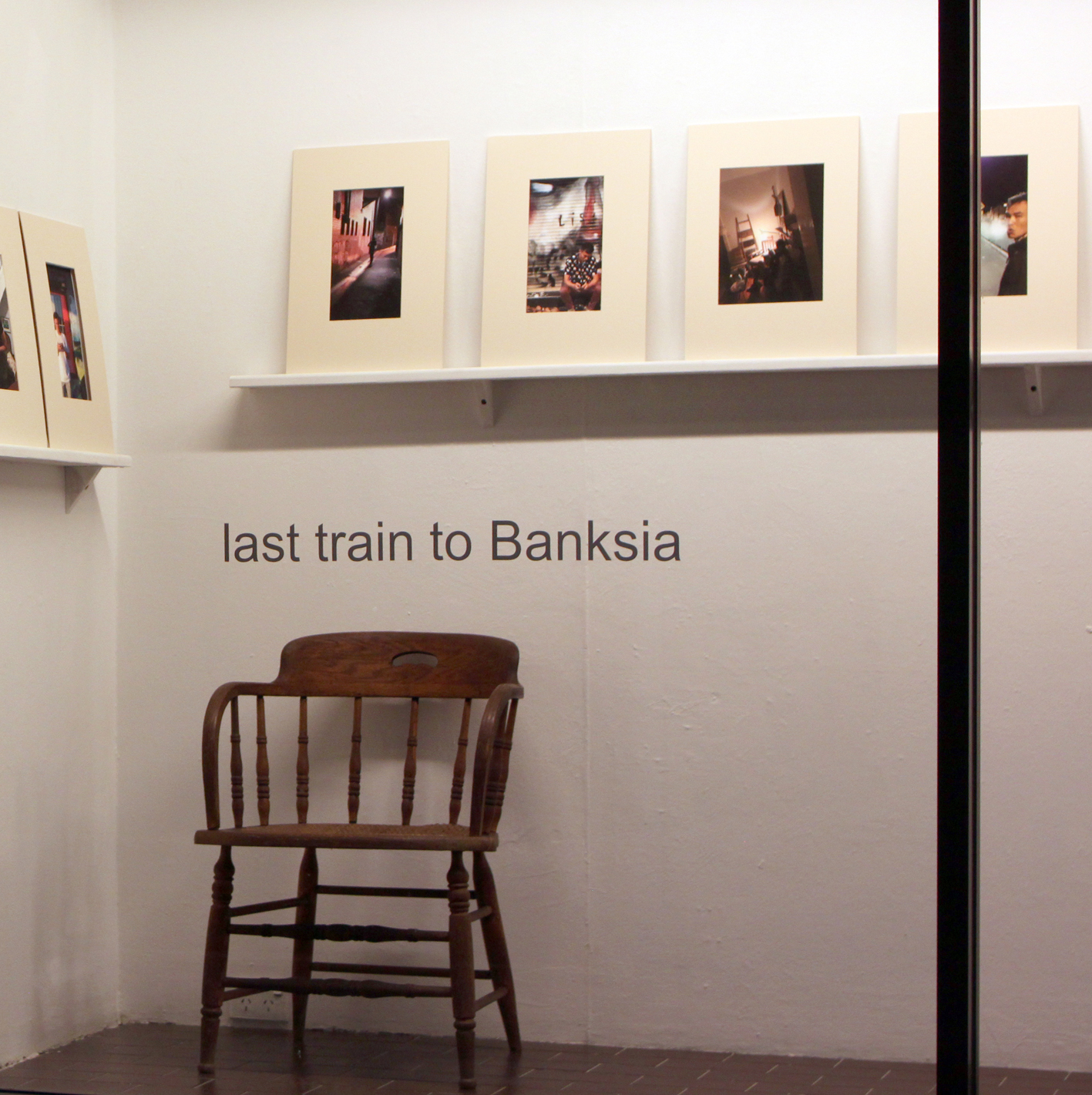
03 July - 10 August      Last Train to Banksia

Link to artist's website


Bryan is a neighbour. He is the Fitzgerald of Chee Soon and Fitzgerald, a shop along Regent St. He’s the guy who sweeps the street in a wide arc around the shop, delivering the same aura of calmness to our street that his shop exudes. And he’s a photographer who observed Raam, a friend making his way to Redfern Station for the Last train to Banksia. And among these various endeavours the idea that threads them together is patina – Bryan’s alertness to patina.

Patina is the surface texture of things that visually conveys mood. It’s the shine on an old car’s chrome-work that labels it a classic, the faint echo of wall paint that encapsulates a past rather than indicating the need for modernization. It’s the beauty born of time and the passage of hands. And it’s the romanticism of walking down a street alive to every sensation where the visual charge is of life lived. This is the mood that Bryan Fitzgerald captures for us in his photographs of our streets.
Bryan offers us the gift of pause. It is the moment of stillness, listening, watching some perfect moment of light and shade across a surface that is gone in the moment it takes to perceive it. Then again that might simply be a friend rushing to catch the last train home.

He was born in New Zealand and living there in timber houses he says that he learnt about patina from his great aunts. With a single sweep of their hands they cleaned, making no distinction between inside and out. Timber was scrubbed, the weatherboards painted, lino was no doubt mopped, week in week out imbuing each surface with life. Small changes, incremental differences building across the passage of time and recorded as surface patina are savoured here in photographs of Raam making his journey, short and local that we might understand as cinema. We watch transfixed as time passes

Bryan offers us the gift of pause. It is the moment of stillness, listening, watching some perfect moment of light and shade across a surface that is gone in the moment it takes to perceive it.  Then again that might simply be a friend rushing to catch the last train home.

-Tony Twigg


All works are for sale in editions of 5 at $350 each
Enquiries – contact@cheesoonfitzgerald.com    83991305